

Ogo Journal · 6 October 2026
Corporate wellness isn’t a perk. It’s a performance strategy.
By Bode Bamkole
I’ve spent a lot of my life in high-performance environments.
Sales. Leadership. Running businesses. Boxing.
They’re obviously very different worlds, but they’ve taught me a similar lesson: you can’t separate performance from the condition of the person expected to perform.
In sport, we understand this instinctively.
You wouldn’t expect an athlete to perform at their best while ignoring their recovery, sleep, nutrition, stress and physical health.
Those things aren’t perks.
They’re part of performance.
Yet when it comes to the workplace, we still seem to separate the two.
We talk about performance over here.
And wellness over there.
I think that’s changing.
And it needs to.
We know there’s a problem
The conversation around workforce health has become much bigger than workplace yoga and fruit in the office.
We’re now talking nationally about stress, burnout, long-term sickness, economic inactivity and the impact poor health is having on people and businesses.
The government’s Keep Britain Working agenda is another sign of that shift.
Workforce health isn’t simply an HR issue anymore.
It’s an economic one.
And most businesses I speak to understand that.
Through OGO, we’ve worked with teams at sales kick-offs, company all-hands, offsites, leadership sessions and other events.
Whenever we talk about energy, recovery, resilience or simply looking after yourself properly, the response is rarely:
“Why does this matter?”
Usually, it’s:
“We need more of this.”
So the problem isn’t convincing people that wellbeing matters.
The interesting question is what businesses actually do about it.
Wellness is still treated like a perk
Look at how seriously businesses approach other things that affect performance.
Sales teams have enablement programmes.
Managers have leadership development.
Companies invest in onboarding, learning and development, culture and retention.
There are strategies, budgets and people responsible for all of them.
Wellness can still look very different.
It’s a wellbeing week.
A benefit on the HR platform.
A session at the annual company event.
Something nice the company does for its people.
And to be clear, there’s nothing wrong with any of those things.
A great experience can have a huge impact.
We see it first-hand.
The problem is the underlying assumption that wellness is an extra.
Something you give people.
Rather than something that helps those people perform.
What happens when your best people aren’t at their best?
Think about a brilliant salesperson who is exhausted.
A manager running on five hours’ sleep.
Someone who is technically at work but mentally fried.
A high performer who has spent two years pushing through stress and eventually decides they’ve had enough.
Those things have a business cost.
There’s absence.
There’s presenteeism — people showing up but operating nowhere near their best.
There’s reduced productivity.
There’s poor decision-making.
There’s disengagement.
And eventually there can be attrition, followed by the cost and disruption of replacing good people.
Suddenly, wellness looks slightly different.
It isn’t just about making work a nicer place to be.
It’s about protecting one of the most important assets a business has:
the ability of its people to perform.
Treat your people like athletes
This is why I keep coming back to the idea of treating employees more like athletes.
I don’t mean making everyone do ice baths at 6am.
And I definitely don’t mean turning the workplace into another competition.
I mean adopting one of the basic principles of high-performance sport:
Performance and recovery aren’t opposites. They’re part of the same system.
Athletes train hard.
But they also recover deliberately.
They think about energy, nutrition, sleep, movement, mindset and managing load because all of those things influence what happens when they’re asked to perform.
Imagine applying the same thinking to a sales team going into a huge quarter.
Or a leadership team making difficult decisions.
Or an entire company going through a period of change.
We expect high performance from people at work.
Maybe we should get better at giving them the tools to sustain it.

That’s where experiences become powerful
There is, however, a problem with talking about wellness.
Talking about it isn’t particularly interesting.
Another PowerPoint telling people they should sleep more isn’t going to change much.
Experiencing something can.
That’s one of the reasons we built OGO around experiences.
Get people out of their normal environment.
Get them moving.
Challenge them.
Help them recover.
Give them something they can feel rather than another concept they’re supposed to remember.
And, importantly, let them do it together.
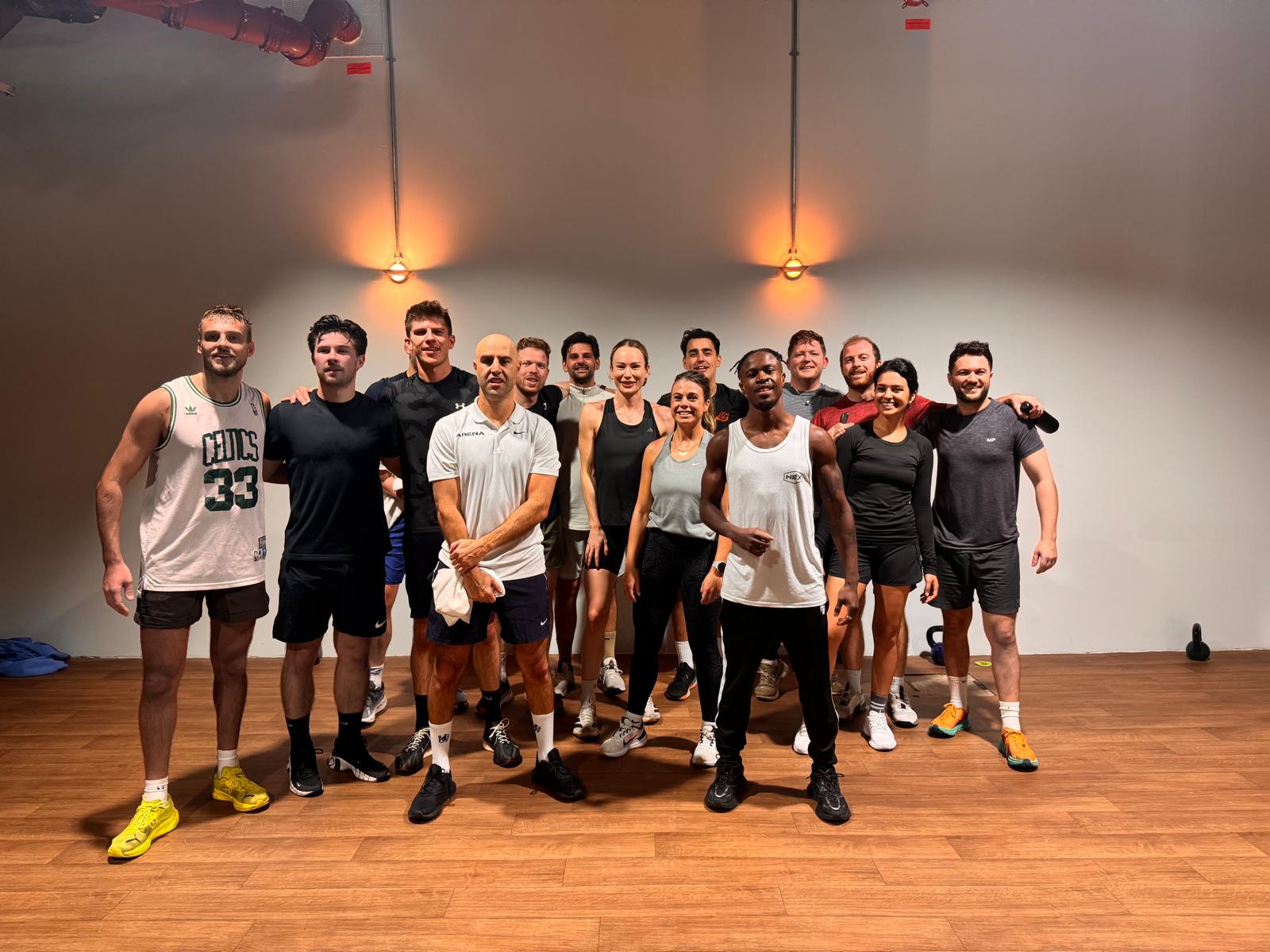
We’ve seen what happens when you introduce these ideas into a sales kick-off, all-hands, team day or company offsite.
People engage with wellness differently when it stops being something they’re being told about and becomes something they’re actually doing.
A cold-water experience can become a conversation about stress and how we respond to it.
Movement can become a conversation about energy.
Recovery can become a conversation about sustainable performance.
A team challenge can create connection between people who normally only see each other through a screen.
The experience is fun.
It should be.
But there’s a reason behind it.
Your next company event can do more than entertain people
Most businesses already have moments when their people come together.
Sales kick-offs.
Offsites.
All-hands.
Leadership days.
Team events.
Conferences.
And if you already have everyone’s time and attention, there’s an opportunity to do something more valuable with it.
Not another hour of slides.
Not wellness theatre.
An experience people genuinely want to take part in, built around ideas that can improve how they feel, work and perform.
That’s what we create at OGO.
We design corporate wellness experiences around your team, your event and what you’re trying to achieve — whether that’s energy, resilience, recovery, connection, performance or simply giving people an unforgettable shared experience.
Because wellness doesn’t need to be the boring bit of the agenda.
It can be the bit everyone talks about afterwards.
Wellness isn’t a perk. It’s part of performance.
I think the companies that understand this early will have an advantage.
Because healthier, more energised people don’t just feel better.
They can think better.
Lead better.
Sell better.
Collaborate better.
And, importantly, sustain that performance for longer.
So perhaps corporate wellness has been sitting in the wrong box.
It isn’t simply a benefit.
It isn’t CSR.
And it isn’t something you wheel out once a year because it’s Wellbeing Week.
Your people are the engine of the business.
Investing in their ability to perform isn’t a perk.
It’s a performance strategy.
Bring OGO to your next team event
Planning a sales kick-off, company offsite, all-hands, leadership day or team event?
OGO creates memorable wellness experiences that get teams moving, connecting, recovering and thinking differently about performance.
Cover photo by Vitaly Gariev / Unsplash.