
Ogo Journal · 15 October 2026
How to Stay Consistent When Motivation Runs Out
By Bode Bamkole
Everyone wants to achieve something.
Get fitter. Build a business. Learn a skill. Change careers. Improve their health. Become better at what they do.
And most people know, at least roughly, what they need to do to get there.
The problem isn’t always knowing what to do.
It’s doing it consistently.
Because starting something when you’re motivated is relatively easy.
Continuing when you’re tired, bored, frustrated or not seeing results? That’s where things get interesting.
And I think we’ve developed a slightly complicated relationship with that discomfort.
Have we become too quick to give up?
We live in an interesting time.
On one hand, there’s hustle culture.
Wake up at 5am. Work harder. Sleep less. Optimise everything. Never stop.
On the other, there’s a growing conversation around burnout, mental health, recovery and the importance of slowing down.
And rightly so.
I’ve experienced overtraining, injuries and the consequences of pushing my body too far. I understand that recovery isn’t optional.
But I sometimes wonder whether we’ve started confusing two very different things.
Needing to recover and not wanting to do something difficult.
Because they’re not always the same.
Sometimes you’re genuinely exhausted.
Sometimes you’re injured.
Sometimes your body or mind needs a break.
And sometimes?
You just don’t feel like doing the work.
It’s boring.
It’s uncomfortable.
You’re not particularly good at it yet.
You’d rather be doing something else.
And that’s normal.
But if every moment of discomfort becomes a reason to stop, how do you ever build anything that requires sustained effort?
Motivation gets you started. Routine keeps you going.
I think one of the biggest mistakes people make is relying on motivation.
They wait until they feel inspired.
Until they’re in the right mood.
Until they’ve got the energy.
Until Monday.
Until next month.
But motivation is unreliable.
Some days you’ll wake up ready to take on the world.
Other days, getting through your usual routine feels like a challenge.
That’s why I think routine matters so much.
When something becomes part of your routine, you spend less time negotiating with yourself about whether you’re going to do it.
You just do it.
You don’t need to feel inspired every time you brush your teeth.
You don’t need a motivational speech to get dressed.
They’re simply things you do.
And while building a business or learning gymnastics is obviously more demanding, I think there’s something to learn from that principle.
The less time you spend deciding whether to do the work, the more energy you have to actually do it.
How long does it take to build a habit?
You’ll often hear people say it takes 30 days to form a habit.
Others say 60 or 90.
The reality is that there’s no universal number.
Research suggests habits can take anywhere from weeks to several months to become automatic, depending on the behaviour and the individual.
But I think the exact number is less important than the principle.
Repetition changes your relationship with an activity.
At first, everything requires effort.
You have to remind yourself.
Make time.
Overcome resistance.
And consciously decide to show up.
But the more consistently you repeat something, the more familiar it becomes.
Eventually, the question changes.
Instead of asking, “Am I going to do this today?”
You start asking, “When am I doing this today?”
And that’s a completely different relationship with your goals.
There’s no skipping the apprenticeship
One thing I’ve learned from business, boxing, gymnastics and acting is that being a beginner is uncomfortable.
You’re not particularly good.
You make mistakes.
You look stupid.
You fail at things that other people make look effortless.
And there’s no real way around that.
When I started gymnastics, I already had years of experience in boxing and physical training.
But that didn’t mean I could suddenly perform every movement.
I still had to learn the basics.
Fall over.
Get things wrong.
Work on coordination.
Repeat movements until they started making sense.
Acting has been similar.
You can understand what makes a great performance, but that doesn’t mean you can immediately deliver one.
You have to practise.
Make mistakes.
Get feedback.
And keep developing.
Business is no different.
You might have a vision of building a successful company.
But in the beginning, you could be packaging products yourself.
Sending hundreds of emails.
Making the first sales calls.
Testing software.
Dealing with customers.
Doing things that look nothing like the glamorous version of entrepreneurship you imagined.
And that’s the point.
You don’t get to skip the apprenticeship just because you know where you want to end up.
The boring work is often what makes the interesting work possible.
The boring days are part of the goal
There’s a book called Relentless by Tim S. Grover, who worked with athletes including Michael Jordan and Kobe Bryant.
It explores the mentality behind consistently performing at a high level.
Now, I’m not suggesting everyone needs to live like an elite athlete.
Or that constantly pushing yourself is healthy.
But there’s something valuable about understanding that excellence requires repetition.
And repetition isn’t always exciting.
Sometimes it’s doing the same movement hundreds of times.
Sometimes it’s another sales call.
Another rehearsal.
Another training session.
Another day of eating properly.
Another attempt at something that didn’t work yesterday.
Nothing particularly glamorous.
But those days count.
In fact, they’re often the days that matter most.
Because anyone can work towards a goal when everything feels exciting.
The challenge is continuing when the novelty disappears.
Treat life like sport
This is one of the reasons I believe in treating life like sport.
Sport gives you a framework for understanding performance.
You train.
You practise.
You compete.
You recover.
You review what happened.
And then you go again.
Not every session is a personal best.
Not every performance is brilliant.
Not every week feels like progress.
But you understand that each session contributes to something bigger.
And perhaps more importantly, you learn to separate how you feel on a particular day from your overall commitment.
I’ve had plenty of days where I’ve turned up to train feeling tired.
Or frustrated.
Or nowhere near my best.
But unless there’s a genuine injury, a recovery need or something more important that requires my attention, I generally don’t spend much time questioning whether I should be there.
It’s part of my routine.
It’s part of what I’ve committed to.
And that removes a lot of unnecessary mental negotiation.
I’m not trying to prove something to everyone watching.
I’m there because it’s part of the process.
That doesn’t mean ignoring what my body is telling me.
It means understanding the difference between adjusting the session and abandoning the goal.
Recovery is part of consistency
Now, there’s an important distinction here.
Consistency doesn’t mean doing everything at maximum intensity every day.
In fact, that’s often a good way to become inconsistent.
I’ve learned that through injuries and overtraining.
If you’re constantly pushing without recovering, eventually something gives.
Your performance drops.
Your motivation suffers.
Your body starts breaking down.
Or you simply become exhausted.
And suddenly, the routine you’ve worked so hard to build becomes impossible to maintain.
That’s why recovery matters.
Sleep.
Nutrition.
Rest.
Time away from work.
Looking after your mental health.
These aren’t distractions from performance.
They’re part of it.
But recovery should support your ability to continue, not become another reason to avoid every uncomfortable experience.
Sometimes the right decision is to train harder.
Sometimes it’s to reduce the intensity.
Sometimes it’s to take the day off.
The skill is learning to recognise which situation you’re actually in.
Consistency isn’t about never resting. It’s about building a routine you can sustain.
Stop negotiating with yourself
I think this is ultimately what staying locked in comes down to.
You decide what matters.
You understand what achieving it requires.
You build a routine around doing the work.
And then you stop treating every difficult day as a new decision about whether the goal is worth pursuing.
Because if you’re constantly renegotiating your commitment, you’ll spend an enormous amount of energy simply trying to get started.
Of course, circumstances change.
Priorities shift.
Sometimes goals need to be reconsidered.
And sometimes quitting is the right decision.
But those should be deliberate decisions.
Not automatic reactions to being tired, bored or uncomfortable.
If you’ve decided something is worth pursuing, give yourself a proper opportunity to pursue it.
Show up.
Do the boring work.
Learn the skills.
Make mistakes.
Recover when you need to.
And repeat.
You don’t need to be motivated every day
There’s a reason so many people start things in January and stop by February.
Starting is exciting.
Continuing is repetitive.
And eventually, the excitement wears off.
That’s when your routine has to take over.
You won’t always feel motivated.
You won’t always feel confident.
You won’t always feel like you’re progressing.
And you certainly won’t always enjoy what you’re doing.
But that doesn’t automatically mean something is wrong.
Sometimes it simply means you’re in the middle of doing something difficult.
And if it’s something you’ve decided genuinely matters to you, that might be exactly where you need to be.
You don’t need to be motivated every day. You need a routine that doesn’t depend on motivation.
Build a culture of sustainable performance
At OGO, we believe life is sport.
That means recognising the importance of movement, consistency, resilience and recovery — not just for athletes, but for everyone.
We bring these principles into the workplace through corporate wellness experiences designed to help teams move, connect, recharge and perform.
From company offsites and wellbeing days to team-building experiences and sales kick-offs, we help organisations create moments that support both individual wellbeing and collective performance.
Planning your next team event? Explore OGO Experiences and discover how we can help your people perform at their best.
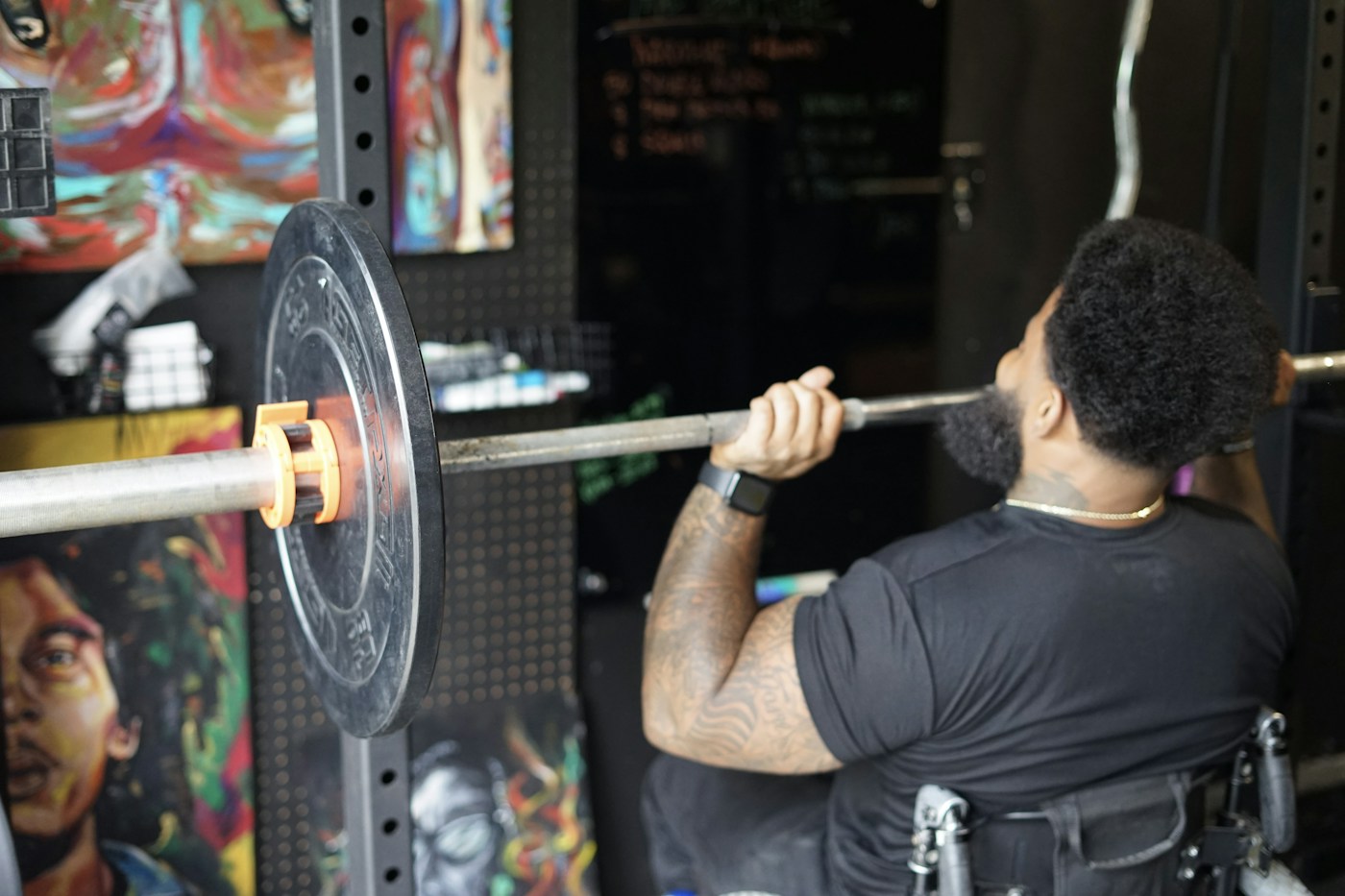
Cover photo by Disabled But Not Really KC / Unsplash.