
Ogo Journal · 30 October 2026
Why Does My Body Get Stiff When I Stop Moving?
By Bode Bamkole
Here’s something I’ve been thinking about recently.
Why does my body feel stiff when I stop moving?
And I don’t mean after sitting at a desk for eight hours.
I mean after ten minutes.
Sometimes even less.
I can spend an hour boxing, training gymnastics or working on my mobility and feel relatively loose.
Then I’ll stand around having a conversation, sit down for a while or stay in one position, and suddenly everything starts tightening up again.
Now, I’ve had my fair share of injuries over the years, so I’m not suggesting everyone’s experience will be the same as mine.
But it got me thinking.
How much of the stiffness we experience comes from a lack of flexibility, and how much comes from simply not moving enough?
And more importantly, if movement makes us feel better, why have we built so much of modern life around staying still?
Why does your body get stiff when you sit or stand still?
First, it’s worth understanding what stiffness actually is.
Because feeling stiff doesn’t necessarily mean your muscles have physically shortened.
That sensation can be influenced by several things.
Your joints.
Your muscles.
Your nervous system.
Previous injuries.
How long you’ve been in a particular position.
And how comfortable your body is moving through different ranges of motion.
When you stay in one position for an extended period, you’re asking the same muscles and joints to tolerate a relatively fixed load.
Some muscles remain active to maintain your posture.
Others aren’t moving through much of their available range.
And depending on the position, certain tissues may become uncomfortable.
Movement changes that.
Your muscles contract and relax.
Your joints move through different positions.
Your nervous system receives new sensory information.
And you redistribute the physical demands across your body.
That can help explain why getting up and moving around often makes you feel less stiff.
Sometimes your body doesn’t need another stretch. It needs a change of position.
Being fit doesn’t mean you’re immune to stiffness
This is the part I find particularly interesting.
We often associate stiffness with being unfit.
And while physical inactivity can contribute to reduced mobility, the relationship isn’t that simple.
You can be strong.
You can exercise regularly.
You can have good cardiovascular fitness.
And you can still feel stiff.
I’ve spent years boxing and training.
More recently, I’ve been developing my gymnastics, flexibility and mobility.
And if anything, working on those things has made me more aware of how differently my body feels depending on what I’ve been doing.
I can feel relatively mobile after training.
But if I spend too long in one position, I can feel that mobility disappearing.
Not necessarily because I’ve suddenly lost flexibility.
But because my body responds differently when I’m moving compared with when I’m stationary.
And I think there’s a useful lesson in that.
Being physically active for an hour doesn’t mean the other 23 hours of your day stop mattering.
Is standing better than sitting?
There’s a lot of conversation about the dangers of sitting.
And understandably so.
Many of us spend substantial portions of our day at desks, in cars, on trains or looking at screens.
But here’s something worth considering.
Standing still isn’t necessarily the solution.
If you replace eight hours of sitting with eight hours of standing in the same position, you’ve changed the posture, but you haven’t necessarily introduced much movement.
And prolonged standing can create its own discomfort, particularly in the legs, feet and lower back.
So perhaps the question shouldn’t simply be whether sitting or standing is better.
Maybe the bigger question is how often we’re changing position.
Sit for a while.
Stand up.
Stretch if you need to.
Change how you’re working.
Move your body through different ranges.
The objective isn’t to find one perfect posture and maintain it all day.
It’s to avoid spending excessive amounts of time in any one position.
Why stretching alone might not solve the problem
Now, I’m a big believer in mobility training.
I’ve spent plenty of time working on flexibility, stretching and improving my range of motion.
But one thing I’ve learned is that being able to reach a position isn’t necessarily the same as being comfortable using it.
For example, you might be able to stretch your hamstrings into a particular range.
But can you control that range?
Can you generate strength there?
Can you move in and out of it comfortably?
And can you maintain that ability without needing to spend twenty minutes warming up first?
These are different questions.
Flexibility generally refers to the range of motion available at a joint or through a movement.
Mobility is often used to describe your ability to move through that range with control.
And while stretching can improve range of motion, strength and movement practice also play important roles in developing physical capability.
That’s particularly obvious in gymnastics.
It’s one thing to have enough flexibility to reach a position.
It’s another to have the strength, coordination and control to perform a movement using that range.
And that’s changed how I think about mobility.
I don’t just want to be able to stretch into a position. I want my body to be capable of moving through it.
Your body adapts to what you regularly do
One of the simplest principles in physical training is that your body adapts to the demands placed on it.
If you consistently train strength, you can become stronger.
If you practise a skill, you can improve your coordination.
If you regularly work on your range of motion, you may improve your flexibility and mobility.
But the reverse matters too.
If you rarely move through certain positions, you may become less comfortable or capable in those ranges over time.
And if most of your day involves sitting, standing or repeating a limited set of movements, you’re not necessarily giving your body much opportunity to practise anything else.
That’s not to say everyone needs to start doing backflips.
But think about how much movement variety we experience as children.
Running.
Jumping.
Climbing.
Squatting.
Rolling around.
Playing.
Then think about how much of that disappears as we get older.
For many adults, movement becomes something scheduled.
A gym session.
A run.
A fitness class.
An hour of sport.
And outside those sessions, we spend much of our time relatively stationary.
It’s an interesting contrast.
We recognise the importance of exercise, but we don’t always think about the importance of movement throughout the day.
Why movement should be part of your day, not just your workout
I’m not suggesting everyone needs to train for hours.
Or that every office should become a gym.
In fact, I think the solution is much simpler.
Make movement a normal part of everyday life.
If you’re working at a desk, take opportunities to get up.
If you’ve been sitting for a while, walk around.
If you’re on a phone call, consider taking it standing or walking.
If you’ve been standing in one position, change your posture or move your legs.
If you’re feeling stiff, try some gentle movement rather than automatically forcing yourself into a deep stretch.
None of these things is particularly revolutionary.
But they can make movement more accessible.
And importantly, they don’t require everyone to become a fitness enthusiast.
You don’t need to be an athlete to benefit from moving more regularly.
You just need opportunities to move.
What does this mean for workplace wellbeing?
This is where I think the conversation becomes particularly relevant.
We spend a huge amount of time at work.
And for many people, work is one of the biggest influences on how much they move throughout the day.
If your job involves sitting at a desk for long periods, that environment shapes your movement habits.
If your job involves standing in one place, that creates a different set of physical demands.
And if your working day is packed with meetings, deadlines and responsibilities, finding opportunities to move can become surprisingly difficult.
So when companies talk about supporting employee wellbeing, I think movement deserves more attention.
Not necessarily through complicated programmes.
Sometimes it’s about creating opportunities.
Movement breaks.
Walking meetings.
Team activities.
Workplace cultures where getting up from your desk isn’t treated as a lack of productivity.
Because if we’re serious about helping people feel and perform better, we should consider how their working environment affects their physical wellbeing.
And not just what they do outside working hours.
You don’t need to move constantly. But you do need to keep moving.
There’s an important distinction here.
The human body isn’t designed to be in motion every second of the day.
Rest matters.
Recovery matters.
And being able to sit, stand and relax comfortably is part of being physically capable.
But movement matters too.
And I think we sometimes underestimate how much regular movement contributes to how our bodies feel.
For me, that’s been one of the biggest lessons from combining boxing, gymnastics and mobility training.
It’s not simply about becoming more flexible.
Or stronger.
Or fitter.
It’s about maintaining a body that’s capable of doing the things I want it to do.
And that doesn’t happen exclusively during training.
It happens through the way I use my body every day.
So if you find yourself feeling stiff after sitting or standing still, it doesn’t automatically mean something is wrong with your flexibility.
It might be worth asking a simpler question.
When was the last time you moved?
And if stiffness is persistent, severe or associated with other symptoms, it’s worth getting it assessed rather than assuming inactivity is the only cause.
Make movement part of everyday life
At OGO, we believe life is sport.
That doesn’t mean everyone needs to train like a professional athlete.
It means recognising that movement, recovery and physical wellbeing are part of living and performing well.
Through our mobility resources and corporate wellness experiences, we help individuals and organisations make movement more accessible.
Whether you’re looking to improve your mobility or bring more movement into your workplace, there’s always somewhere to start.
Explore OGO’s mobility resources and workplace wellness experiences — because movement shouldn’t be limited to your workout.
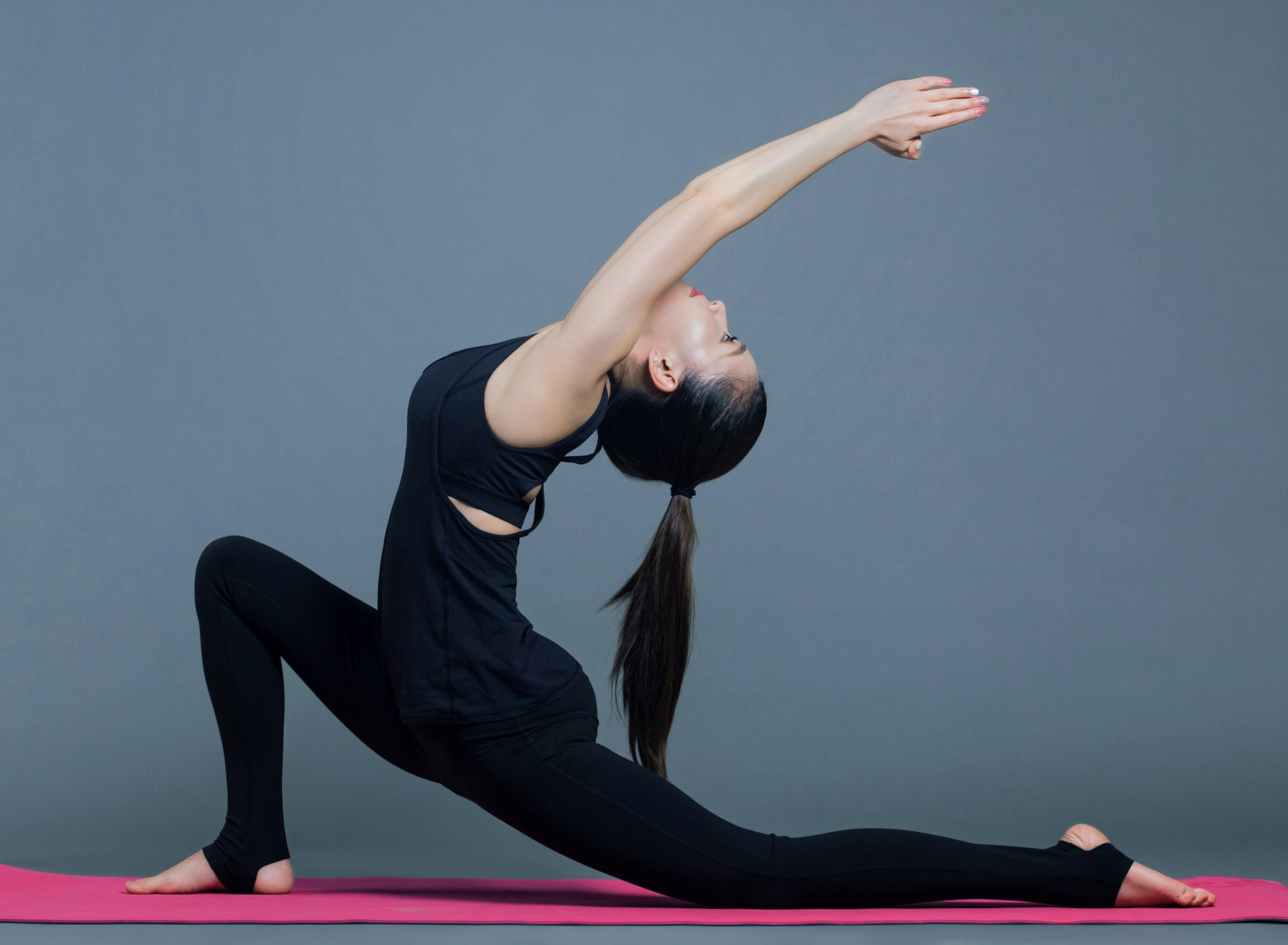
Cover photo by Alex Shaw / Unsplash.