
Ogo Journal · 15 October 2026
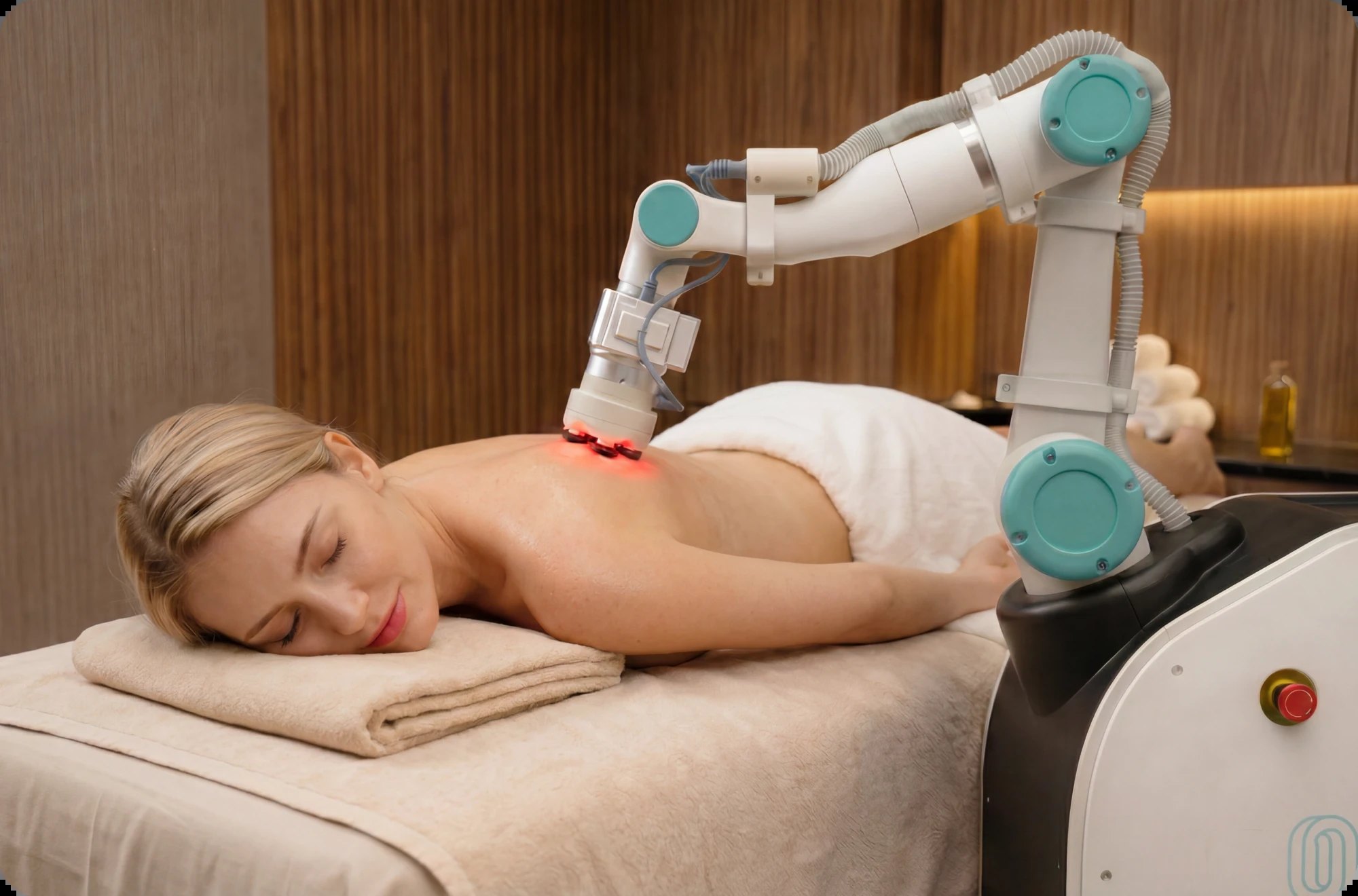
Would You Try an AI Massage Robot? Tom Brady Would.
By Bode Bamkole
Would you let a robot give you a massage?
A few years ago, that probably would have sounded like something out of a science fiction film.
Today, it's becoming a reality.
And apparently, even Tom Brady is getting involved.
The seven-time Super Bowl champion has teamed up with robotic massage company Aescape to introduce the Brady Protocol, a 30-minute robotic massage experience inspired by his approach to recovery throughout his NFL career.
Now, I can't speak for Aescape or its technology.
But I can speak about robotic massage.
Because I've tried it myself.
And I think there's a much bigger conversation to be had about what this technology could mean for the future of recovery.
My first experience with an AI massage robot
Earlier this year, I attended the Health Optimisation Summit, where I had the opportunity to try an AI-powered massage robot.
The experience came through one of our partners, Yuan Life, which works with robotic massage and other recovery technologies.
And I'll be transparent about that relationship from the beginning.
We work with Yuan Life, so naturally, I'm interested in the technology and where the market is heading.
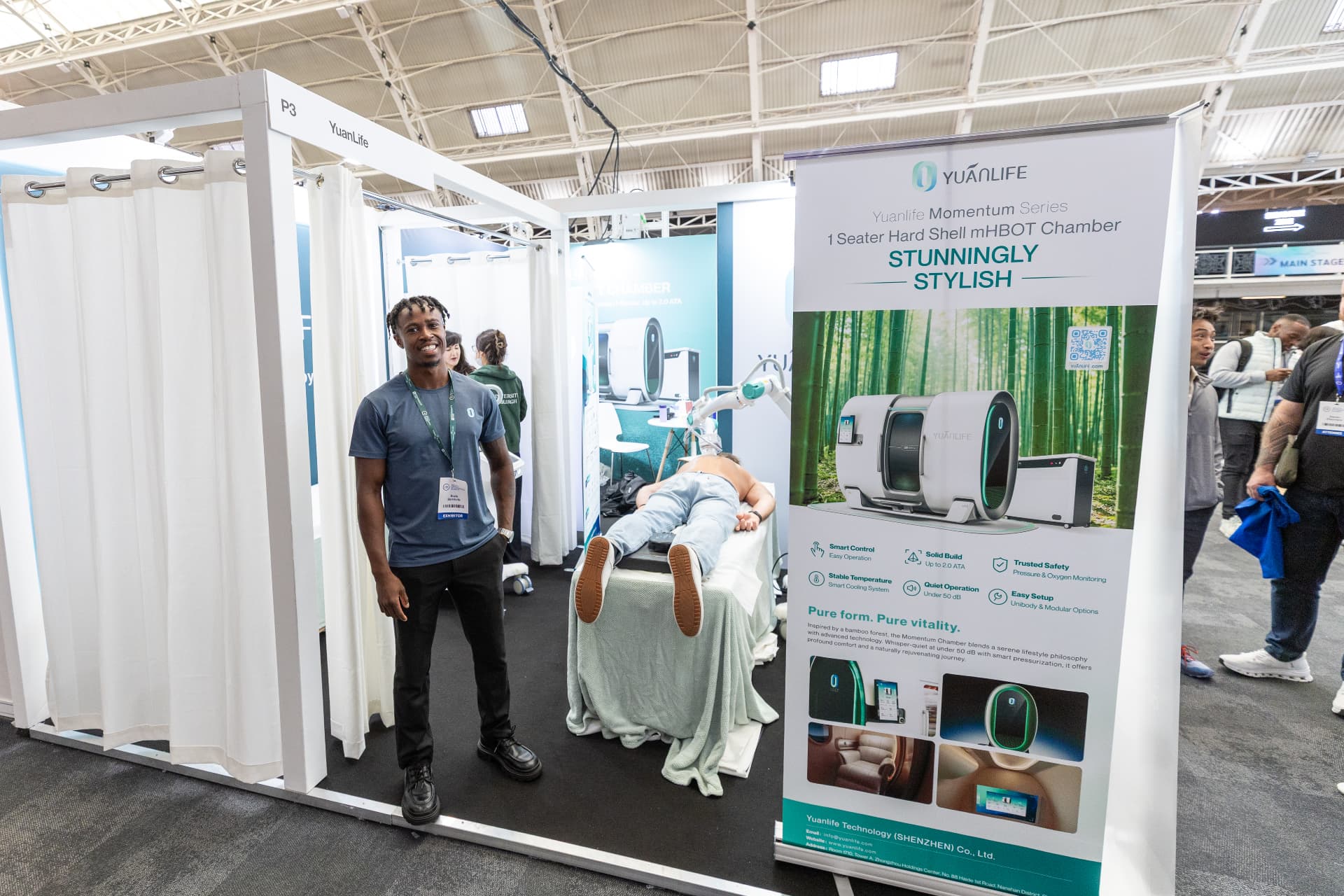
But that doesn't change how unusual the experience feels the first time you try it.
You're lying down, getting a massage, except there's no massage therapist.
Instead, there's a machine delivering the treatment.
It's a strange concept when you think about it.
Massage is something we've traditionally associated with human touch, experience and the ability of a therapist to understand what your body needs.
So the idea of a robot performing that service takes some getting used to.
But once you get past the novelty, the more interesting question becomes:
Why wouldn't this technology become more common?
Tom Brady isn't the only one interested in robotic recovery
When someone like Tom Brady gets involved in a technology, people pay attention.
And understandably so.
Brady spent more than two decades competing at the highest level of professional American football.
His longevity was remarkable, and his approach to training, recovery and maintaining his body became a significant part of his reputation.
So seeing him work with Aescape on the Brady Protocol is interesting.
Not because celebrity involvement automatically makes a product good.
But because it reflects something happening across the wider wellness and recovery industry.
Recovery is becoming something people actively invest in, rather than something they think about only when they're injured or exhausted.
And technology is increasingly part of that conversation.
We've already seen this with compression boots, infrared saunas, hyperbaric oxygen therapy and other recovery tools.
Robotic massage is another development worth watching.
And whether you're an athlete, an office worker or someone who simply spends too much time sitting down, the idea of making recovery more accessible is an interesting one.
The real problem isn't massage. It's access to massage.
Let's think about traditional massage therapy for a moment.
Most people understand why someone might want a massage.
Maybe you're training regularly.
Maybe you're dealing with muscular tension.
Maybe you've spent eight hours sitting at a desk.
Or maybe you simply want to relax.
But actually getting a massage isn't always straightforward.
You need to find a therapist.
Book an appointment.
Travel to the location.
Find a time that works.
And, depending on where you live and what you're looking for, pay a reasonable amount for the service.
Then there's availability.
A good massage therapist can only treat one person at a time.
And there are only so many appointments available in a day.
That's not a criticism of massage therapists.
It's simply the reality of delivering a hands-on service.
The challenge isn't necessarily convincing people that massage is valuable. It's making it easier for people to access.
And that's where robotic massage becomes interesting.
What if massage was available where you already spend your time?
Imagine working in an office that had a robotic massage system available on-site.
Or attending a university where students and staff could access recovery technology between lectures, training sessions or work.
Imagine a hotel offering robotic massage as part of its wellness facilities.
Or a gym or recovery clinic expanding its services without every additional treatment requiring another therapist.
Suddenly, the conversation changes.
It's no longer just about whether a robot can deliver a massage.
It's about where massage could become available, how often people could access it and what that means for organisations offering wellness services.
Of course, robotic massage isn't a direct replacement for everything a skilled massage therapist does.
Human therapists bring judgement, communication, adaptability and hands-on expertise that technology doesn't automatically replicate.
And different robotic systems have different capabilities.
But the opportunity isn't necessarily about replacing therapists.
It's about expanding access.
Making certain recovery experiences more convenient.
And giving people another option.
Could robotic massage become a normal part of workplace wellness?
This is where things become particularly interesting for us at OGO.
We spend a lot of time thinking about how organisations can make health, wellbeing and recovery more accessible.
And one of the biggest challenges with workplace wellness is that good intentions don't always translate into participation.
A company might encourage its employees to look after themselves.
But what does that actually mean in practice?
Are people given the time?
Do they have access to useful facilities?
Are the experiences convenient?
Or are they expected to organise everything outside their working day?
There's a big difference between telling people to prioritise recovery and making recovery accessible.
Now imagine an organisation that could provide massage technology on-site.
Employees wouldn't necessarily need to travel elsewhere or organise a separate appointment.
The experience could become part of the environment they're already in.
For universities, the same principle could apply to students, staff and sports programmes.
For hotels and gyms, it could create another wellness experience for guests and members.
For recovery clinics, it could complement existing services.
Naturally, the economics, demand and suitability would need to make sense for each organisation.
But the possibilities are worth exploring.
Technology doesn't have to replace the human experience
Whenever new technology enters an established industry, the conversation often becomes about replacement.
Will AI replace this job?
Will robots replace that service?
Will technology make a particular profession obsolete?
I don't think that needs to be the starting point here.
Massage therapy involves far more than applying pressure to muscles.
A skilled therapist can assess a client's needs, adapt their approach and provide a level of personal interaction that matters to many people.
Robotic massage is a different proposition.
Its potential advantages are things like convenience, consistency, availability and the ability to offer certain experiences in environments where traditional massage services might be difficult to provide.
And those advantages don't require us to pretend that every robotic massage system is better than a human therapist.
The question isn't whether robots are better than people. It's whether technology can make useful services available to more people.
That's a much more interesting conversation.
So, would I try an AI massage robot again?
Yes.
I've already tried one, and I'm interested in seeing how the technology develops.
Would I say everyone needs one?
No.
Would I claim that every robotic massage system delivers the same experience?
Absolutely not.
And I'm not going to use this article to argue that Yuan Life's technology is better than Aescape's.
They're different companies with their own products, capabilities and approaches.
What I will say is that seeing someone like Tom Brady get involved in robotic massage makes me even more interested in where the category is going.
Because it suggests that this is no longer just a futuristic concept attracting attention at technology exhibitions.
It's becoming a real commercial conversation.
One involving athletes, wellness companies, recovery providers and organisations thinking about how they support people's health and performance.
And that's a conversation worth having.
The future of recovery might be closer than you think
At OGO, our philosophy is simple:
Whether you're an athlete, a founder, an employee or a student, your ability to perform is connected to how well you look after yourself.
And recovery is part of that.
Not something you earn after burning yourself out.
Not something you only consider when you're injured.
Something worth making room for as part of everyday life.
That's why we're interested in technologies that could make recovery more accessible.
Tom Brady has his protocol.
I've had my first experience with robotic massage.
The question is whether more people and organisations will start exploring it too.
Would you try an AI massage robot?
Bring robotic massage to your organisation
Through our partnership with Yuan Life, OGO helps organisations explore innovative recovery technologies, including robotic massage systems.
Whether you're a university, hotel, gym, recovery clinic or employer looking to expand your wellness offering, we'd be happy to discuss what's possible.
Interested in bringing robotic massage to your space? Get in touch with OGO to explore the technology and potential partnership opportunities.